
[Guest blog by Kelly Gunn]
I didn’t survive cancer because I was brave.
I survived because, at a few critical moments, I made choices when it would have been easier not to.
Four months before my diagnosis, I was told the lumps in my breast were “probably benign.”
Relief came first.
Then something quieter.
I wanted to believe them. I almost did. But my body kept interrupting the story I was telling myself. Not always loudly. Not always dramatically. Just enough to be inconvenient.
So I did what many women do.
I kept going.
I kept working.
I kept drinking wine every night to dull an edge I couldn’t explain.
I told myself I was fine.
Cancer didn’t arrive as a lightning bolt.
It arrived as ignored signals and delayed decisions.
Fatigue that felt different.
A subtle disconnection from my body.
A knowing I kept negotiating with instead of listening to.
When the diagnosis came, it was shocking—and clarifying.
The thing my body had been asking me to notice finally had a name. And once it did, I couldn’t half-listen anymore.
Treatment reduced life to logistics. Appointments. Scans. Waiting rooms.
But the hardest part wasn’t physical.
It was the reckoning.
Cancer didn’t just ask me to survive.
It asked me to look honestly at how I had been living.
Alcohol had been a constant for years. From the outside, it could have looked normal.
From the inside, it dulled my instincts, my emotions.
Drinking made it easier to override my intuition.
To disconnect.
To ignore discomfort instead of investigating it.
Sobriety wasn’t a declaration. It was a quiet decision.
I stopped drinking because I wanted to hear myself again.
I wanted clarity. I also didn’t want to get cancer again.
I wanted to trust the body that had tried—repeatedly—to get my attention.
Healing isn’t passive.
Survivorship doesn’t begin when treatment ends. It begins with the choices you make next.
I had to relearn how to listen without questioning myself into silence. To treat discomfort as information, not something to push through. To grieve the version of myself who believed she could outrun her own signals.
We like neat survivor stories.
Warriors. Strength. Transformation.
The truth is messier.
I wasn’t transformed by cancer. I was interrupted by it. And that interruption gave me a choice.
I chose to advocate for myself. To trust my intuition—even when it was dismissed.
To choose sobriety so I could meet my life awake. To build strength as support, not punishment. Saving your life doesn’t always look dramatic.
Sometimes it looks like:
- making the follow-up appointment
- asking for a second opinion
- saying no to what numbs you
- saying yes to rest
- listening when your body raises its hand
I don’t believe cancer gave me a gift. But it forced a reckoning I had been postponing.
It demanded honesty. Presence. Attention.
If there’s one thing I hope other survivors hear, it’s this:
Your choices matter more than you think.
Not just the big medical ones—but the quiet, daily decisions that either bring you closer to yourself or further away.
Your body is not your enemy. Even when it scares you. Even when it breaks down. It is communicating.
I’m here not because I was fearless.
I’m here because I finally listened.
And that changed everything.
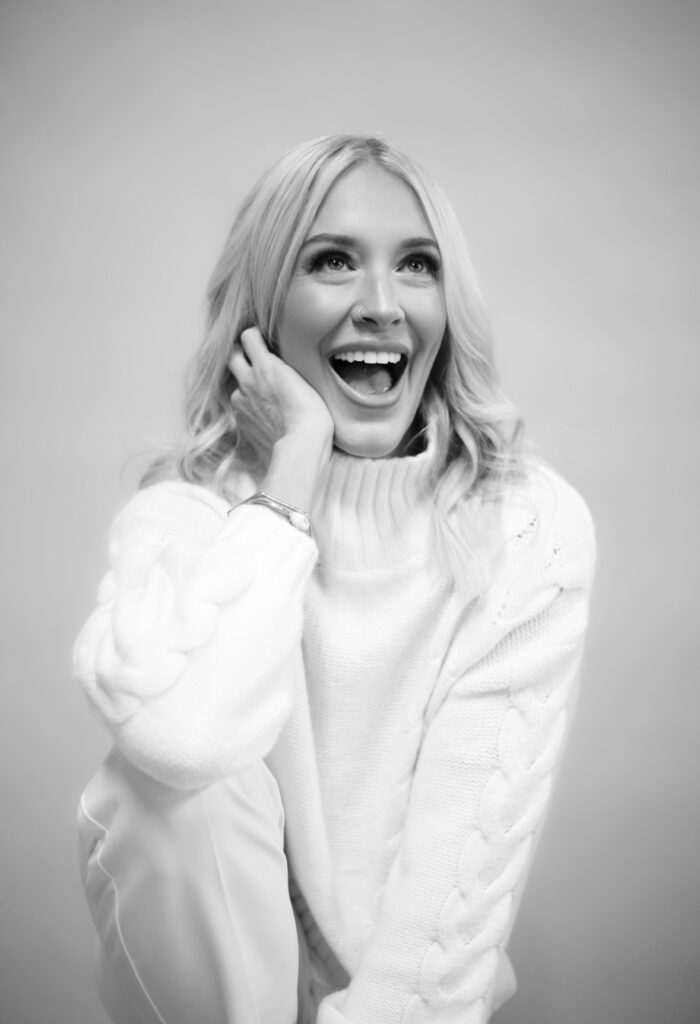
In 2024, a “probably benign” ultrasound missed what would become seven tumors discovered during a 2025 mastectomy. Five years after a benign biopsy, the diagnosis that changed everything also saved Kelly’s life. She quit drinking, rebuilt her body, and stepped on stage for a fitness competition just one year later. Now a survivor and advocate, she shares a powerful message of resilience, transformation, and rewriting your story, reminding audiences that strength often rises from the most unexpected places. You can find Kelly on Tiktok @LifeAfterCancerFitness.
Kelly is part of the Official NCSD Speakers Bureau Roster.
